
 Find a doctor
  Contact us


Historic Milestone: Global Resolution on Hemophilia Adopted Under Armenia’s Leadership.
The adoption of the Resolution on “Global Action for Advancing Health Equity for People Living with Hemophilia and Other Bleeding Disorders” during the 79th World Health Assembly (WHO), initiated and actively championed by Armenia, represents a historic achievement of strategic significance for both global health and humanitarian policy.
Armenia emerged not only as the initiating country but also as one of the principal architects and earliest co-sponsors of this global initiative, bringing international attention to a health issue that had remained largely overlooked within global health policy for many years.
One of the most significant aspects of the resolution is its broad scope. It addresses not only classical hemophilia but also the full spectrum of chronic and frequently underdiagnosed bleeding disorders that substantially affect quality of life, reproductive health, social participation, and psychological well-being.
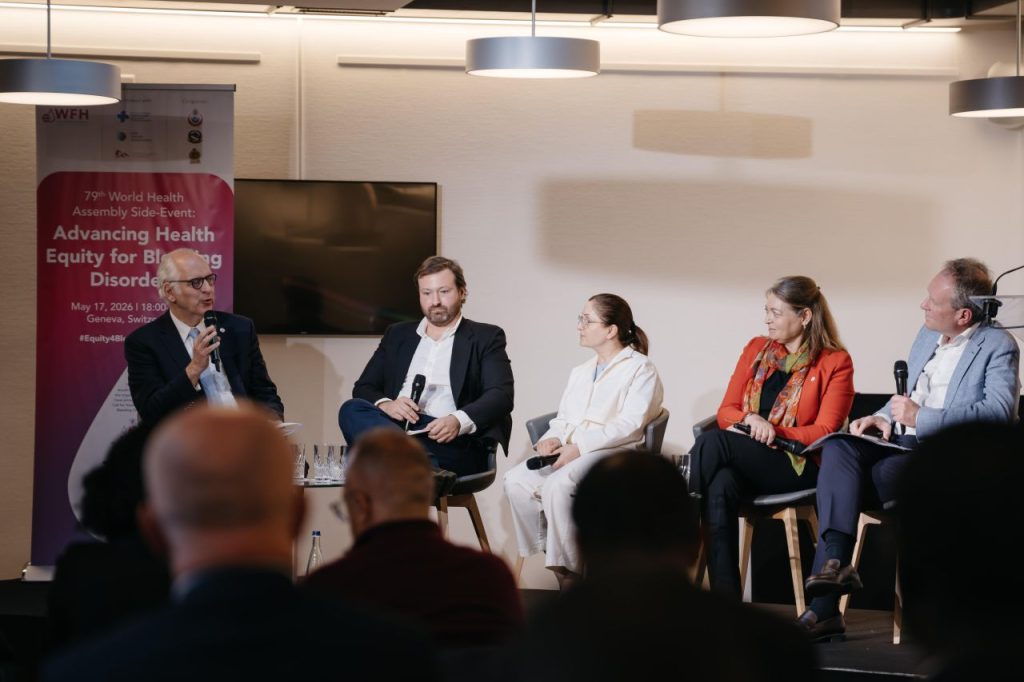
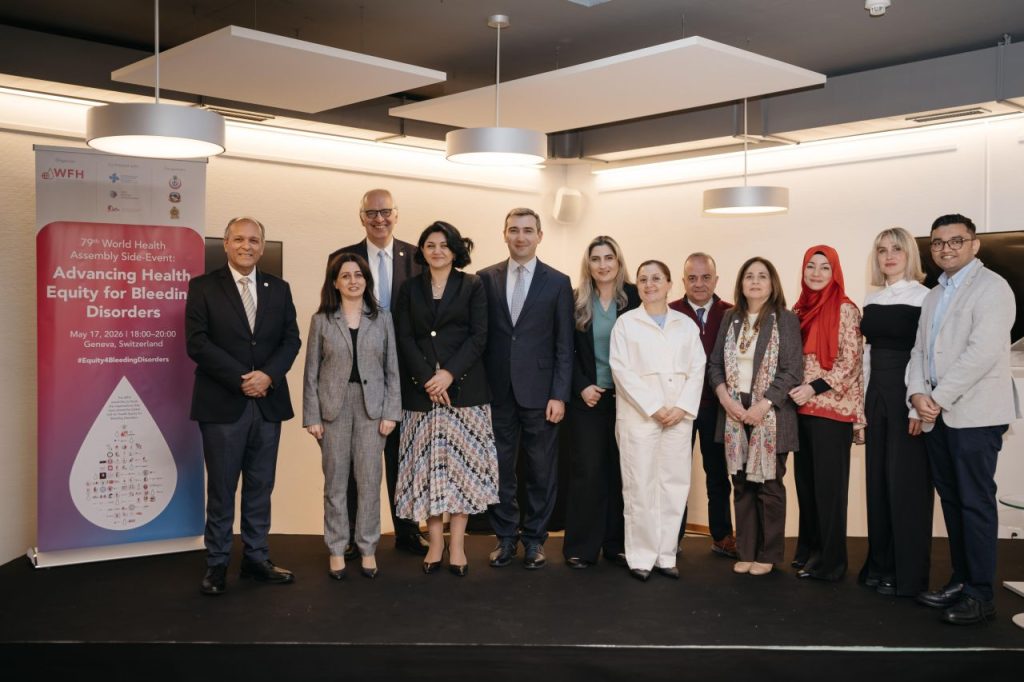
Particularly noteworthy is the resolution’s focus on bleeding disorders among women and girls—conditions that have historically been underrecognized, underestimated, and, in many societies, considered a taboo subject. Across numerous countries, heavy and prolonged menstrual bleeding, unexplained anemia, postpartum hemorrhage, and perioperative bleeding are often not recognized as potential manifestations of underlying hemostatic disorders.
As a result, many women and girls live for years with chronic bleeding, pain, iron deficiency, fatigue, and significantly impaired quality of life without receiving an appropriate diagnosis or treatment. Such symptoms are frequently dismissed as “normal female problems,” leading to delayed referrals and, in many cases, exclusion from appropriate healthcare pathways.
In this context, the adopted resolution carries not only medical significance but also profound social and human rights implications. It formally recognizes that the early detection of bleeding disorders, the protection of women’s health, and equitable access to modern diagnostic and therapeutic services are fundamental components of health equity.
For Armenia, this initiative holds particular importance, as the country successfully elevated an issue that had long suffered from limited awareness and insufficient international attention. This achievement demonstrates Armenia’s capacity not only to participate in the global health agenda but also to shape it by advocating for vulnerable and frequently underserved patient populations.
For the Yeolyan Hematology and Oncology Center and the Armenian professional community, this development may mark the beginning of a new era of growth and international engagement. The Center has the potential to evolve into a regional center of excellence in the fields of women’s bleeding disorders, rare coagulation disorders, and comprehensive hemostatic care.
At the same time, the expertise and scientific potential of Armenian specialists can serve as a foundation for international collaborations, educational programs, research initiatives, and regional leadership.
The resolution sends a powerful message to the global community: bleeding disorders are neither “rare” nor “silent” conditions. They represent critical issues of public health, women’s health, social justice, and human dignity. Continued neglect of these conditions can no longer be considered acceptable.
The Armenian experience may serve as an effective model for countries that continue to face challenges related to limited diagnostic capacity, unequal access to treatment, and shortages of specialized expertise. This achievement represents not only professional recognition but also a responsibility to continue providing scientific, educational, and policy leadership on the international stage.
Accordingly, the adoption of this resolution may be regarded as the beginning of a new era in the global management of hemophilia and bleeding disorders—an era in which Armenia assumes not the role of a follower, but that of a leader and agenda-setter.
Following the adoption of the resolution, the role of the Center is expected to expand not only within Armenia but throughout the region across educational, scientific, clinical, and policy domains.
This new phase may create opportunities for:
• Organizing regional training programs and fellowship initiatives;
• Participating in international research networks;
• Conducting new clinical studies and trials;
• Implementing advanced diagnostic technologies;
• Strengthening collaboration with global expert organizations and professional societies.
For Armenia, this process opens unique strategic opportunities. By establishing hemophilia and other inherited bleeding disorders as global public health priorities, the resolution may facilitate the expansion of national programs, increased governmental investment, improved access to innovative therapies, strengthened laboratory diagnostic capacity, and greater participation in international grant-funded and educational initiatives.
At the same time, it reinforces Armenia’s position in global health diplomacy as a country capable of shaping international agendas and leading complex healthcare initiatives of global significance.


